Over the last 20+ years, Predictive Engineering has tackled some of the most complex applications of the ASME BPVC Section VIII, Division 2 specifications.

Over the last 20+ years, Predictive Engineering has tackled some of the most complex pressure vessel consulting applications of the ASME BPVC Section VIII, Division 2 "design-by-analysis" specifications. Our pressure vessel consulting work has ranged from the stress and fatigue analysis of large-diameter nuclear waste recycling vessels under NQA-1 requirements Vessels with internal piping and structures subjected to sloshing, seismic and added-mass effects to cryogenic thick-walled vessels to high-temperature reactors.
- Stress and fatigue analysis of large-diameter nuclear waste recycling vessels under NQA-1 requirements
- Vessels with internal piping and structures subjected to sloshing, seismic and added-mass effects
- Transient thermal-fatigue of thick-walled tanks
- Lifting and transportation analyses
- Buckling analysis via ASME formulas, Eulerian and Nonlinear methods
- Differential thermal-stress analysis of heat exchanges having mixed materials
Within this body of work, we have applied the following codes:
- ASME BPVC Section VIII, Division 2 stress and fatigue
- ASCE 4-98 with added-mass applications for normal modes analysis
- ASCE 7-02, AISI N690 and ABS
To support our pressure vessel work, we have written custom software for stress and fatigue evaluation of thin and thick-walled pressure vessels.
In summary: Our careful and meticulous ASME BPVC pressure vessel consulting work has allowed us to classify tanks and vessels as "fit-for-service" that would typically have required extensive rework by hand-calculations. Clients come to us when they need high-quality work executed and documented to withstand the most rigorous reviews whether DOE, GE Water and Gas or SpaceX.
Full ASME case study (PDF)
This sloshing video was made using the FSI capabilities in LS-DYNA. The fluid was modeling using SPH with the vessel mesh imported directly from Femap as a standard plate mesh. The wave action accelaration was applied to the model and reaction forces calculated at the base of the vessel. Forces from this Fluid Sturcture Interation analysis were verified against ASCE 7-02 sloshing calculations and were found to be within 10% of agreement.
Spray-Drying Chamber: Seismic, Wind and Lifting
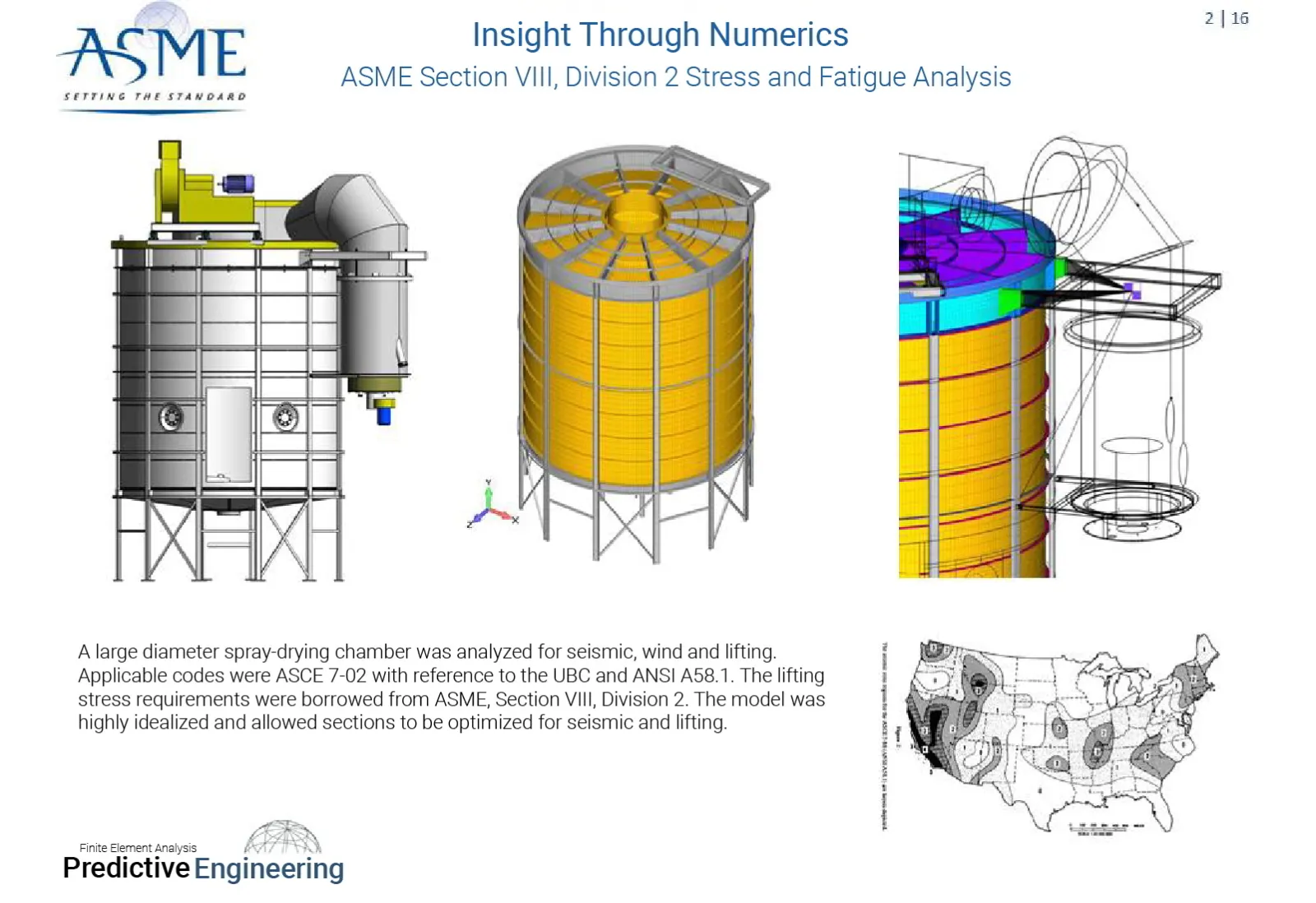
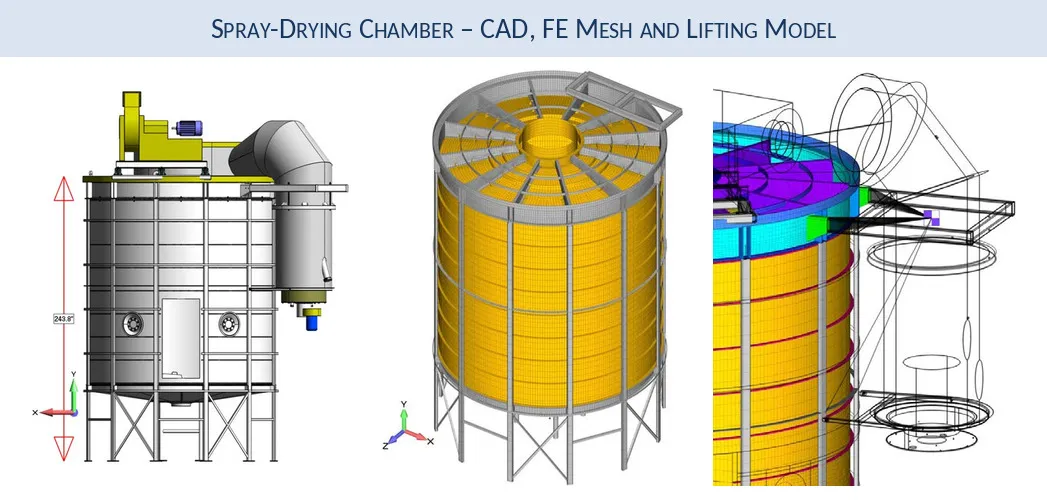
A large diameter spray-drying chamber was analyzed for seismic, wind and lifting. Applicable codes were ASCE 7-02 with reference to the UBC and ANSI A58.1. The lifting stress requirements were borrowed from ASME, Section VIII, Division 2. The model was highly idealized and allowed sections to be optimized for seismic and lifting.
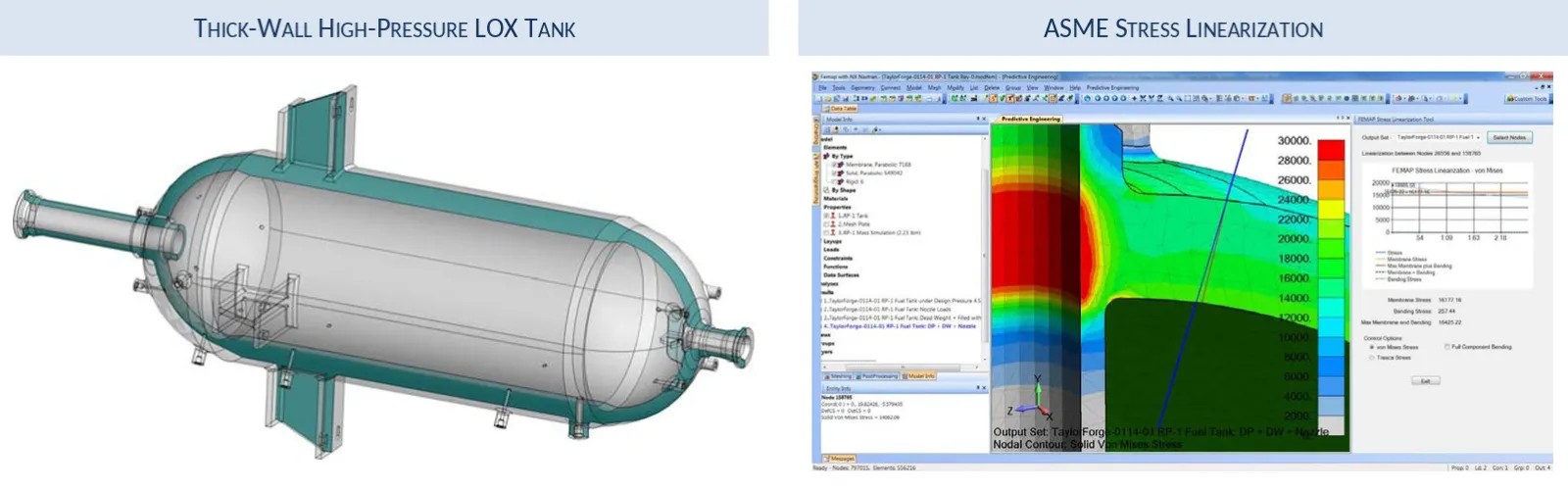
High-Pressure LOX Tanks
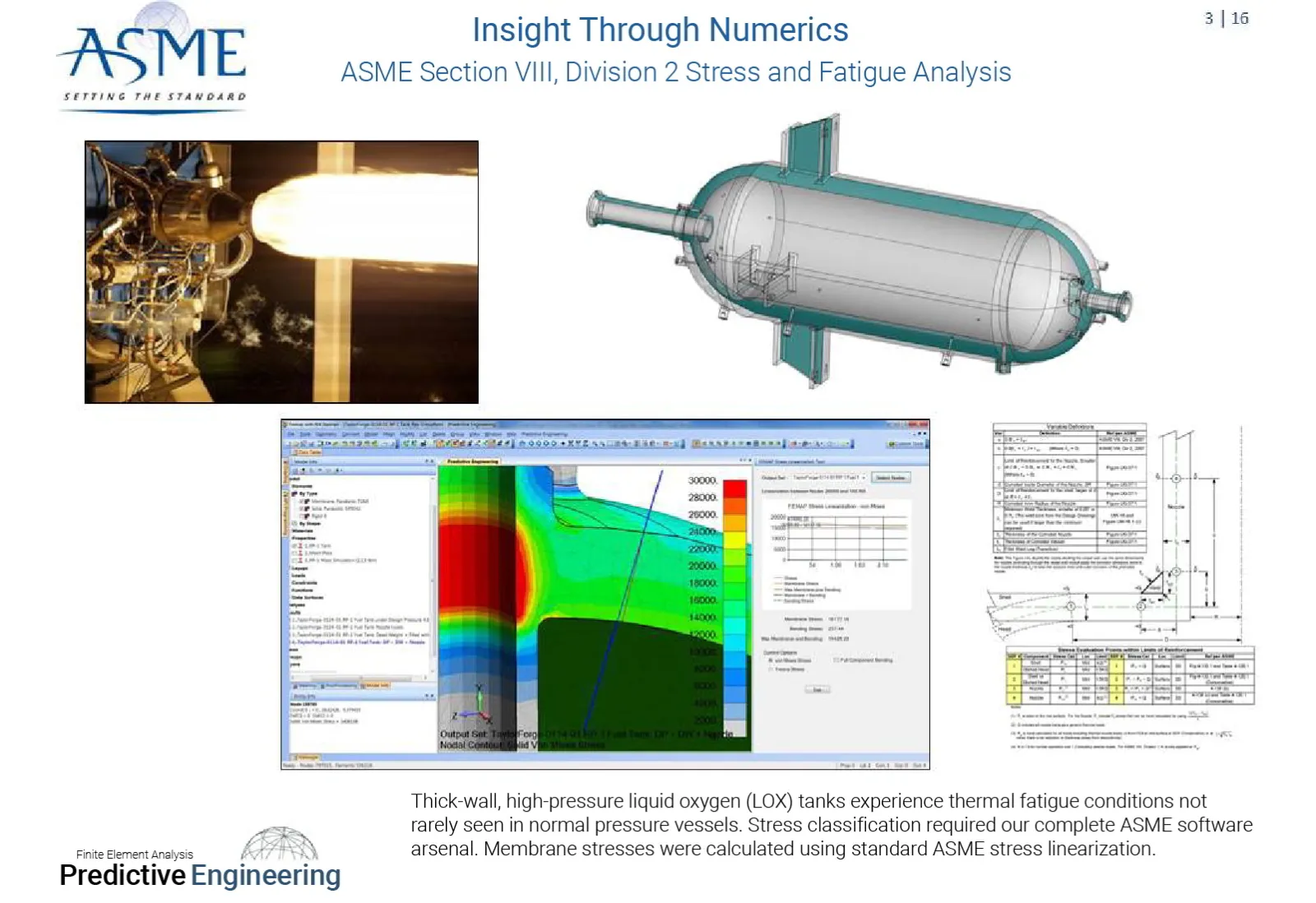
Thick-wall, high-pressure liquid oxygen (LOX) tanks experience thermal fatigue conditions rarely seen in normal pressure vessels. Stress classification required our complete ASME software arsenal. Membrane stresses were calculated using standard ASME stress linearization.
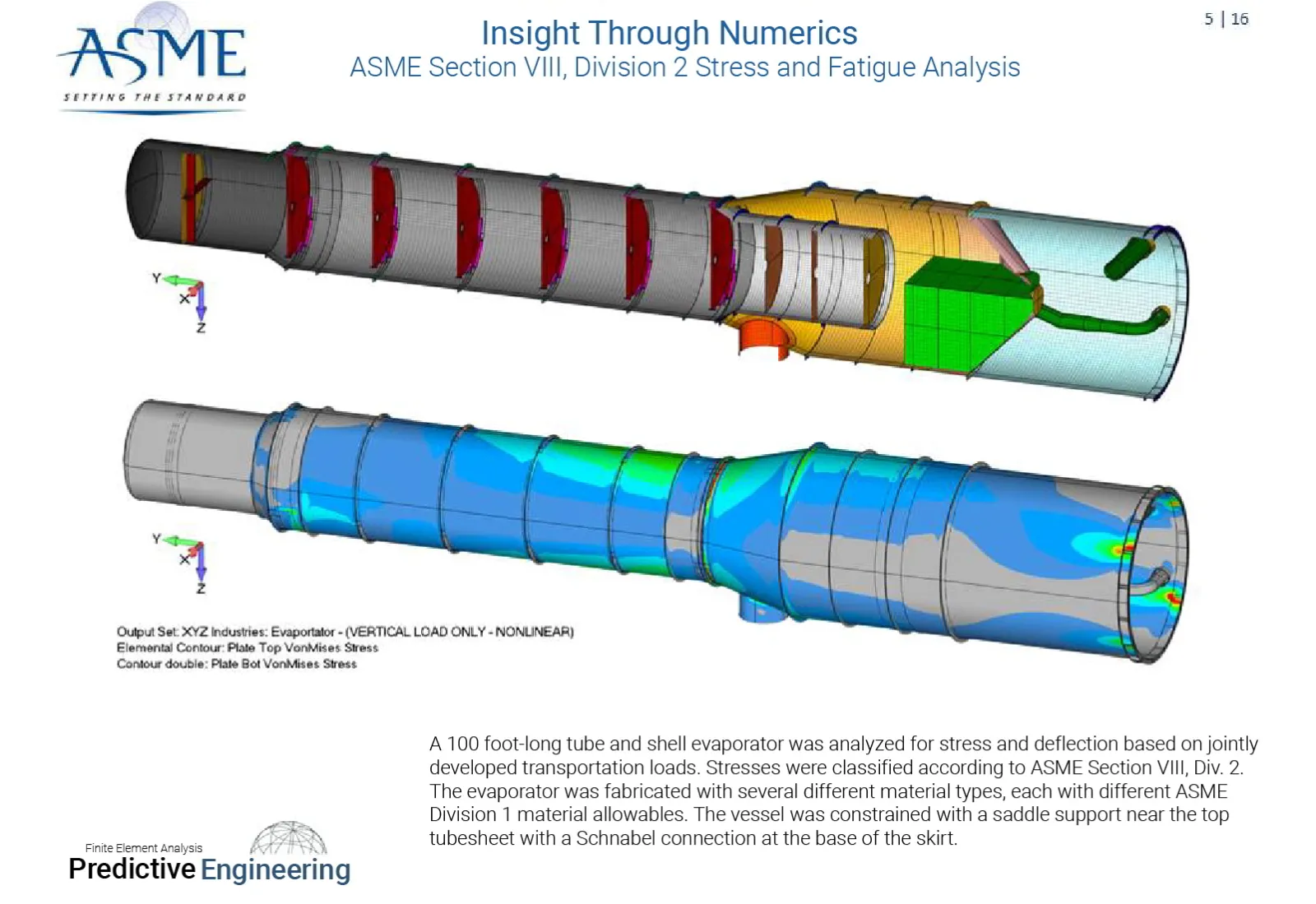
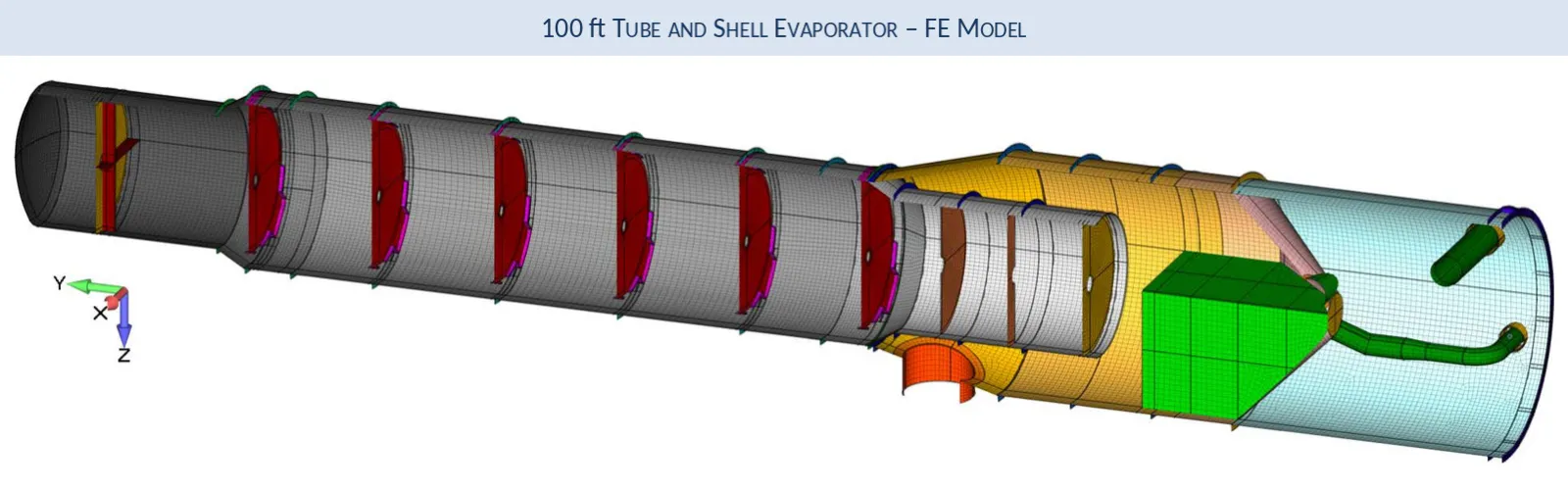
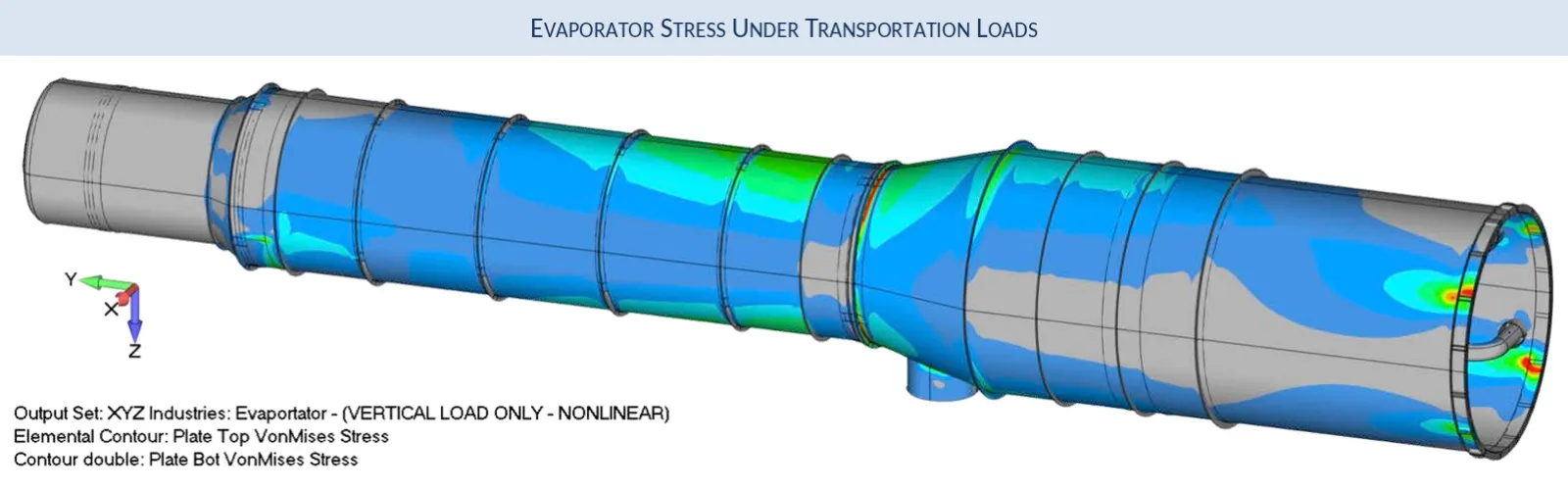
100 ft Evaporator Under Transportation Loads
A 100 foot-long tube and shell evaporator was analyzed for stress and deflection based on jointly developed transportation loads. Stresses were classified according to ASME Section VIII, Div. 2. The evaporator was fabricated with several different material types, each with different ASME Division 1 material allowables. The vessel was constrained with a saddle support near the top tubesheet with a Schnabel connection at the base of the skirt.
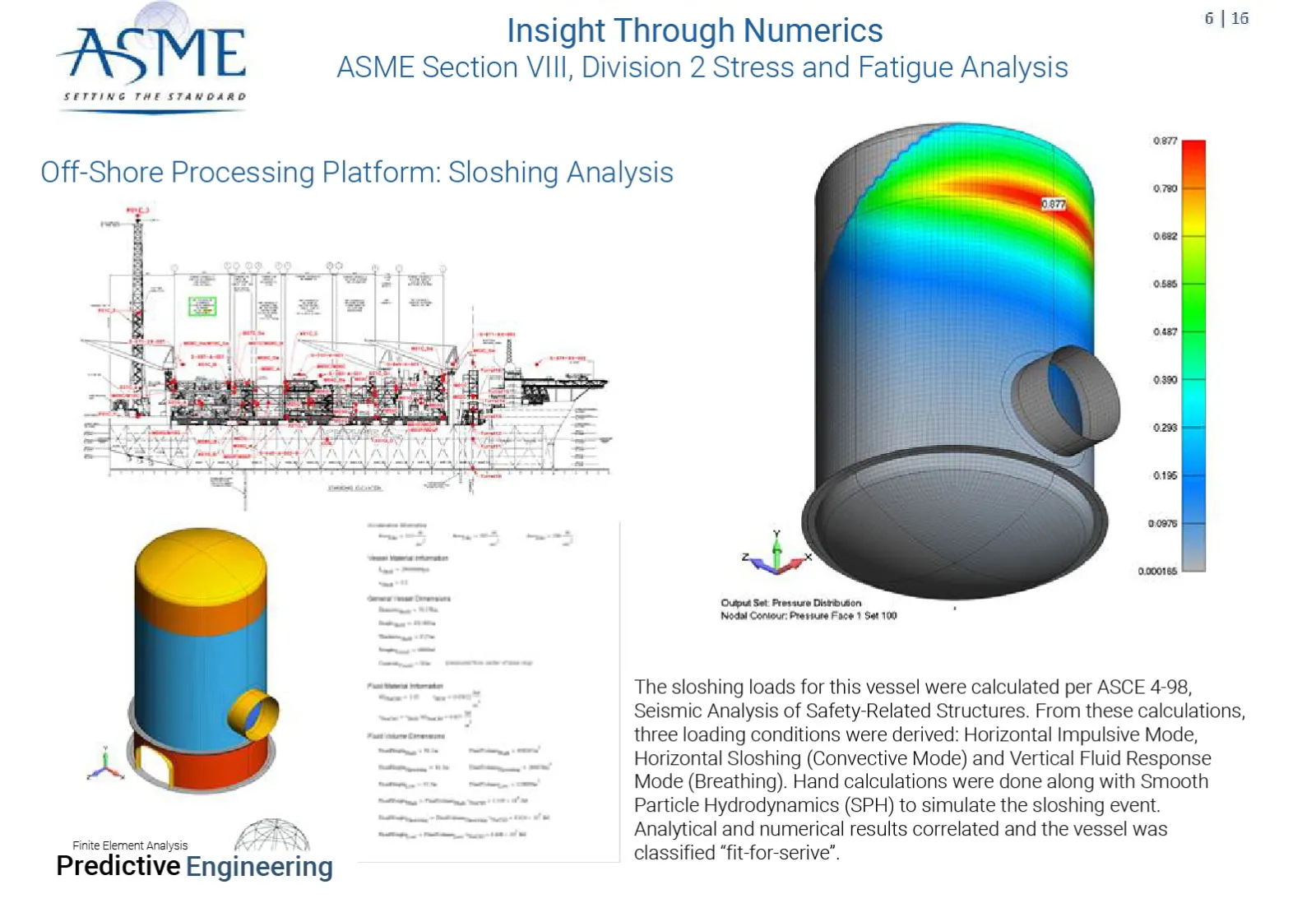
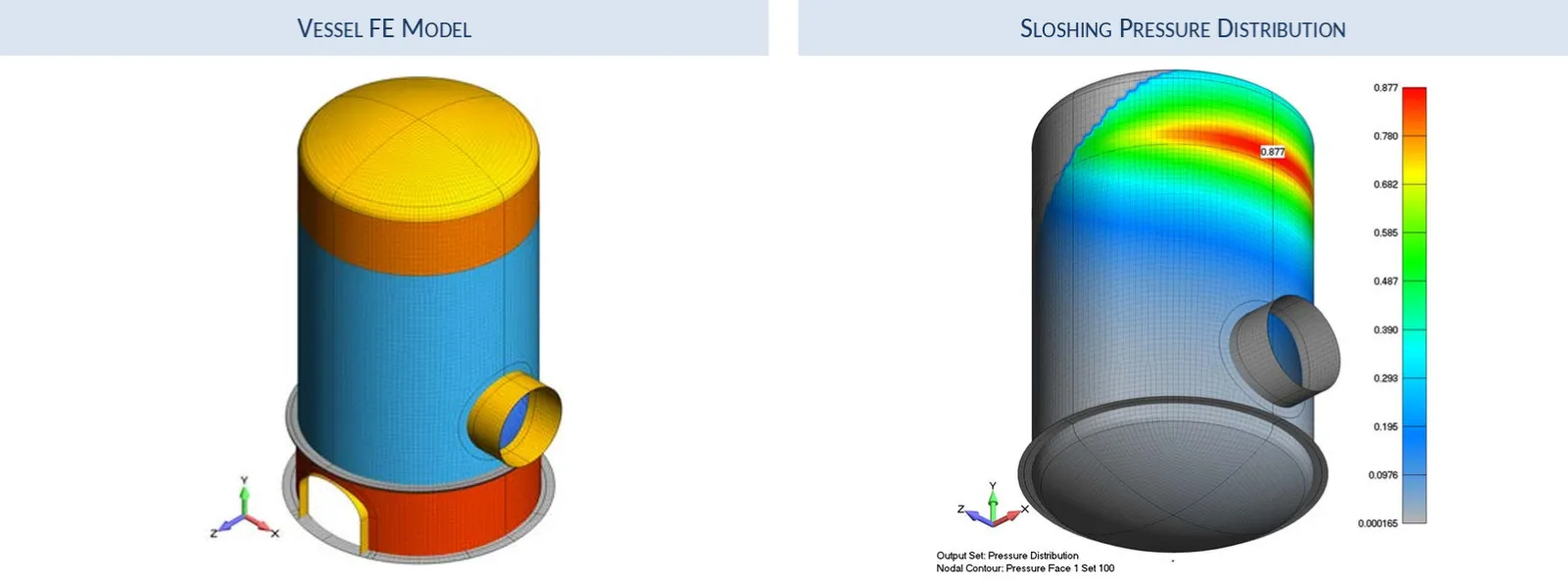
Off-Shore Processing Platform: Sloshing Analysis
The sloshing loads for this vessel were calculated per ASCE 4-98, Seismic Analysis of Safety-Related Nuclear Structures. From these calculations, three loading conditions were derived: Horizontal Impulsive Mode, Horizontal Sloshing (Convective Mode) and Vertical Fluid Response Mode (Breathing). Hand calculations were done along with Smoothed Particle Hydrodynamics (SPH) to simulate the sloshing event. Analytical and numerical results correlated and the vessel was classified “fit-for-service”.
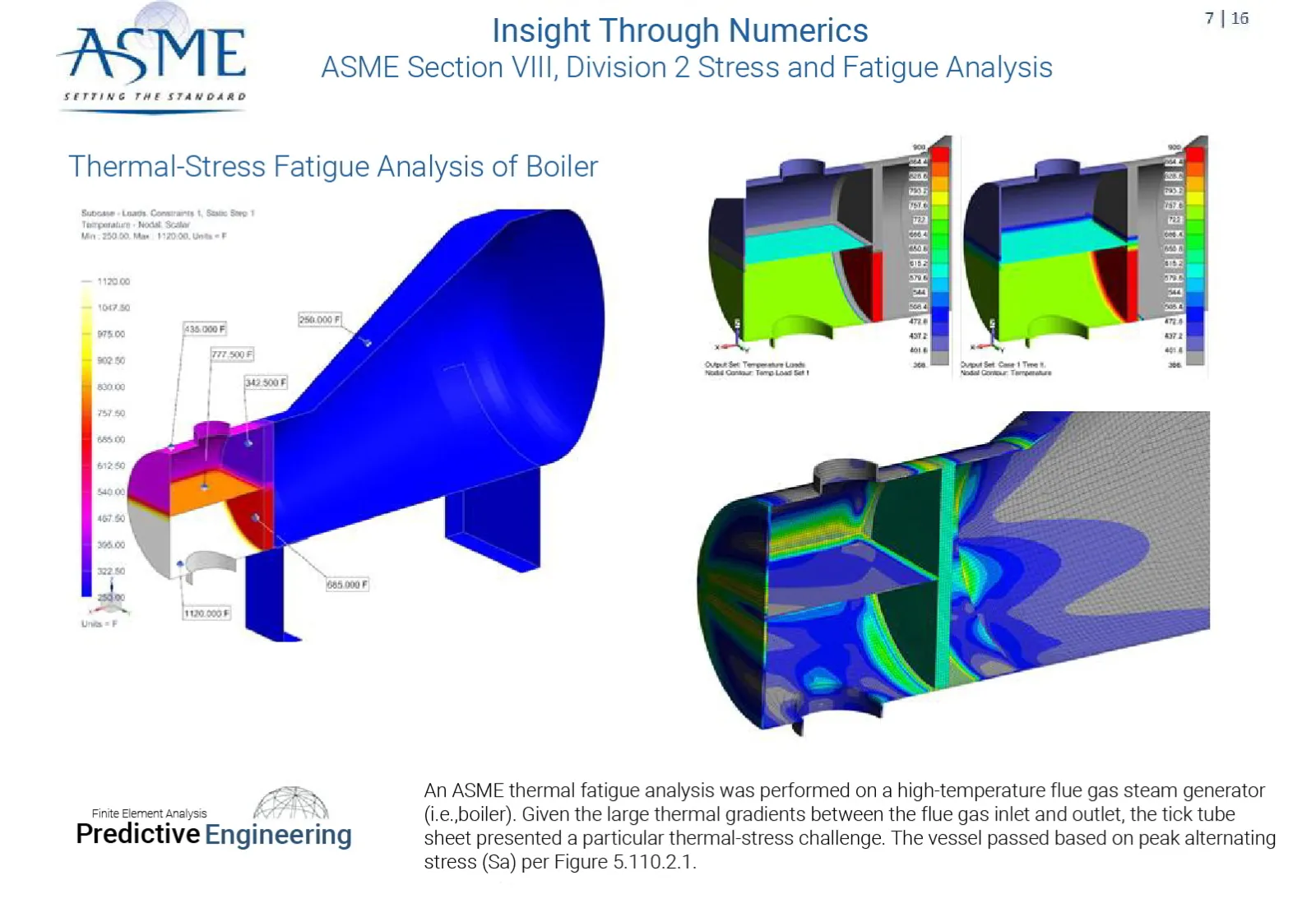
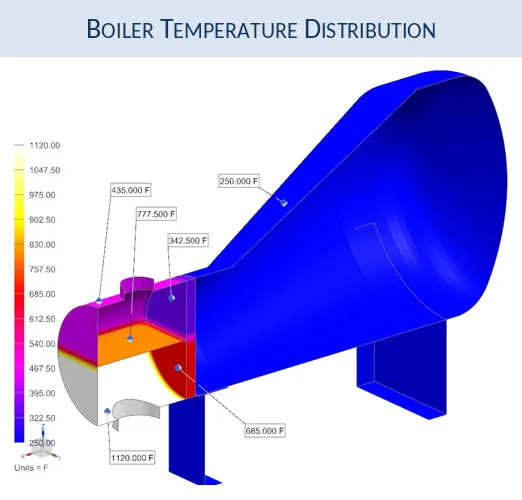
Thermal-Stress Fatigue Analysis of Boiler
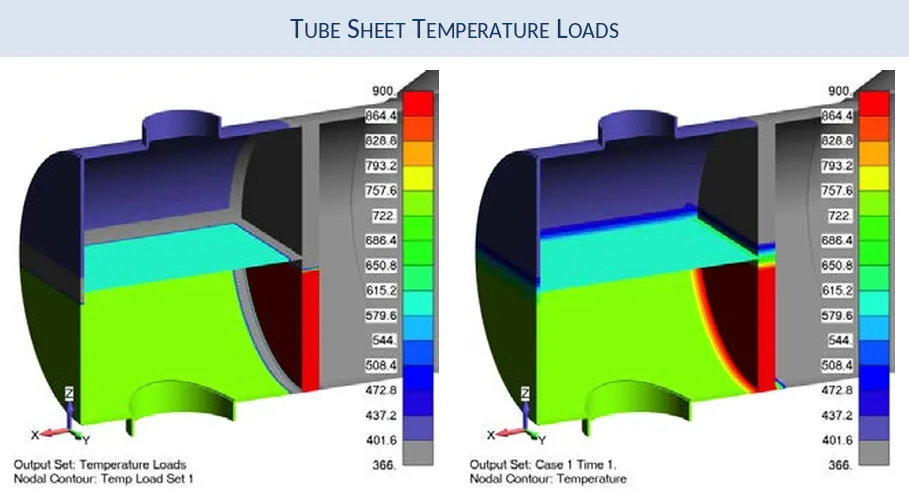
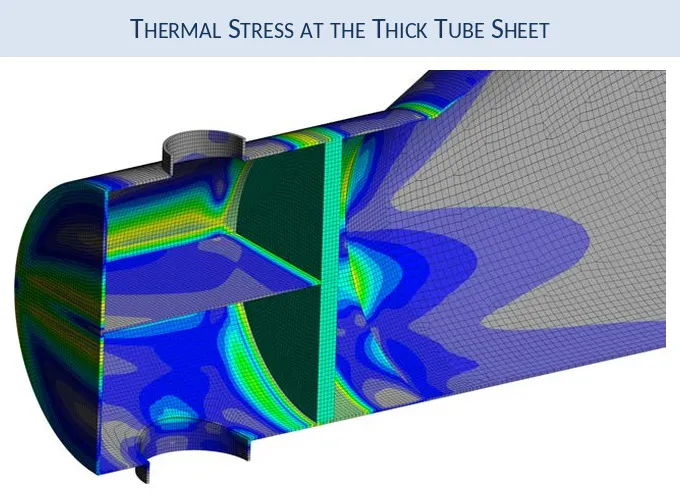
An ASME thermal fatigue analysis was performed on a high-temperature flue gas steam generator (i.e., boiler). Given the large thermal gradients between the flue gas inlet and outlet, the thick tube sheet presented a particular thermal-stress challenge. The vessel passed based on peak alternating stress (Sa) per Figure 5.110.2.1.
Compact High-Pressure Heat Transfer Vessel
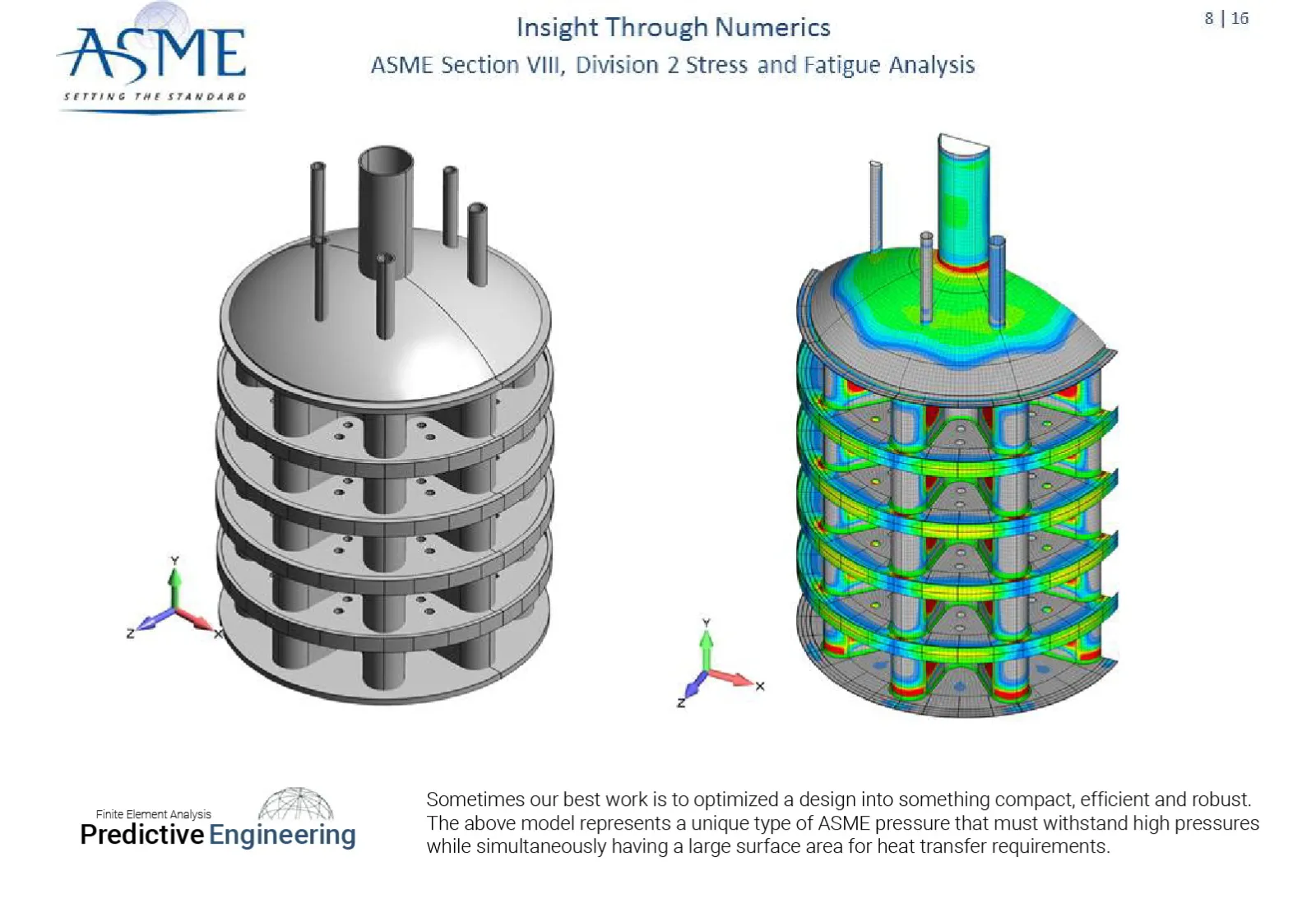
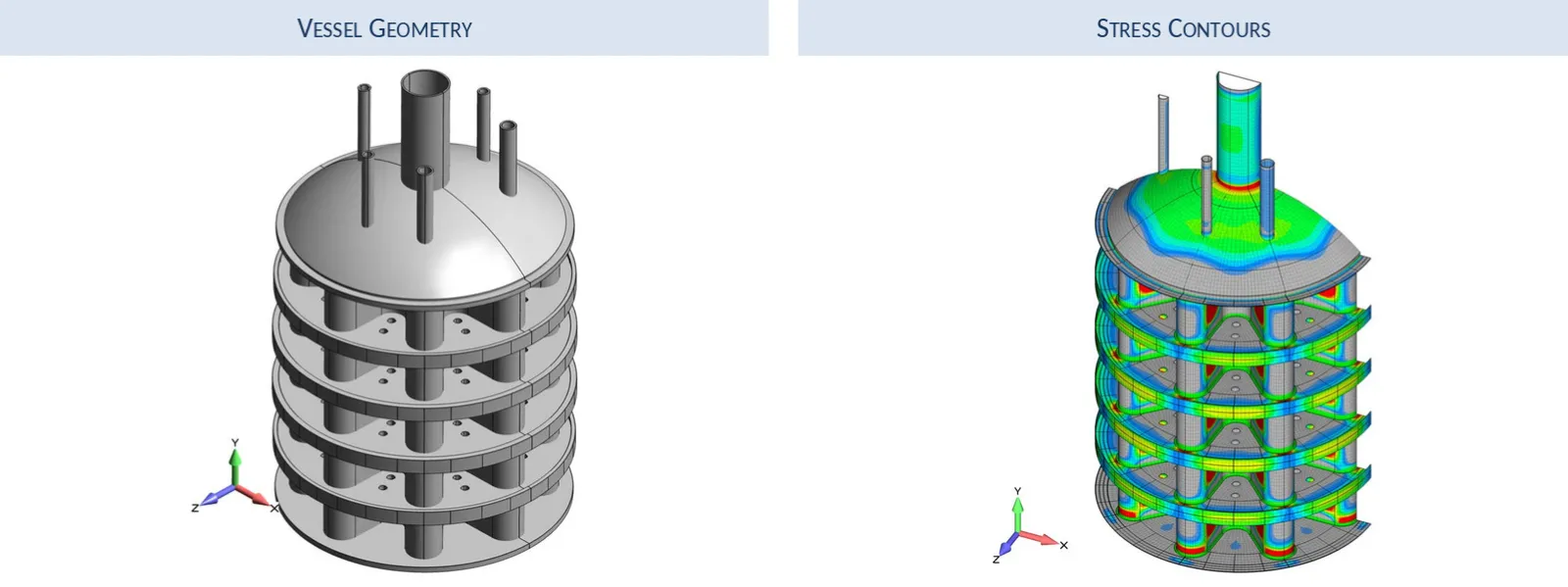
Sometimes our best work is to optimize a design into something compact, efficient and robust. The above model represents a unique type of ASME pressure vessel that must withstand high pressures while simultaneously having a large surface area for heat transfer requirements.
Heat Exchanger and Piping System
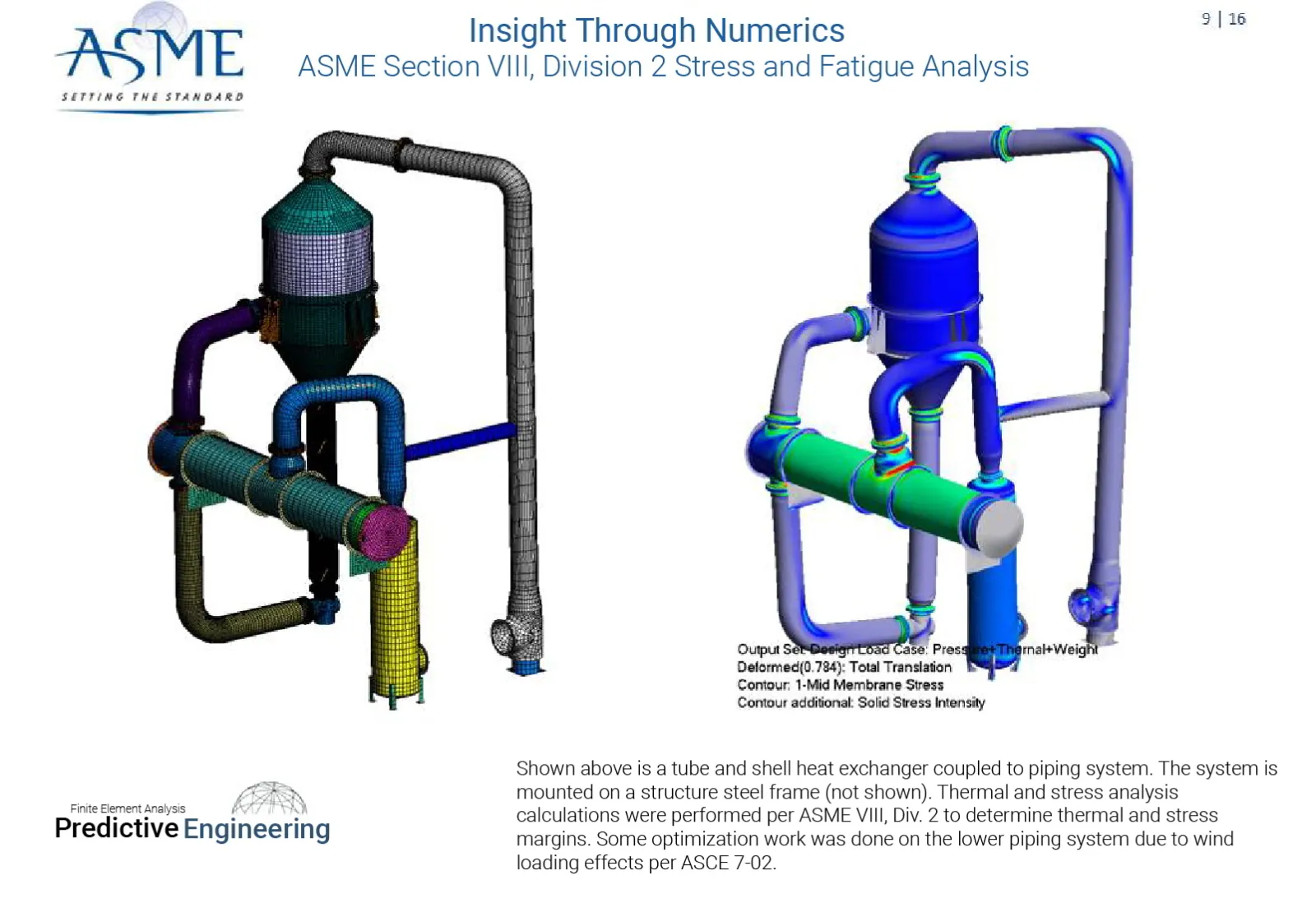
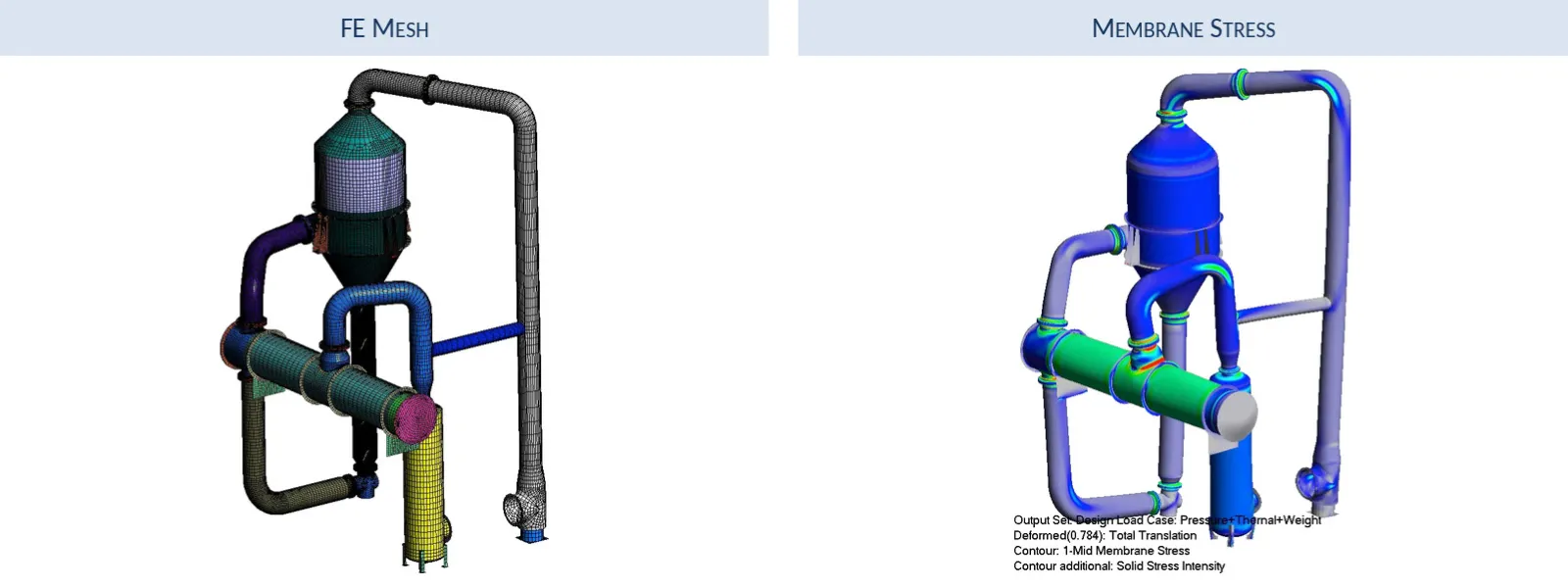
Shown above is a tube and shell heat exchanger coupled to piping system. The system is mounted on a structure steel frame (not shown). Thermal and stress analysis calculations were performed per ASME VIII, Div. 2 to determine thermal and stress margins. Some optimization work was done on the lower piping system due to wind loading effects per ASCE 7-02.
Shell and Tube Heat Exchanger: Buckling Design
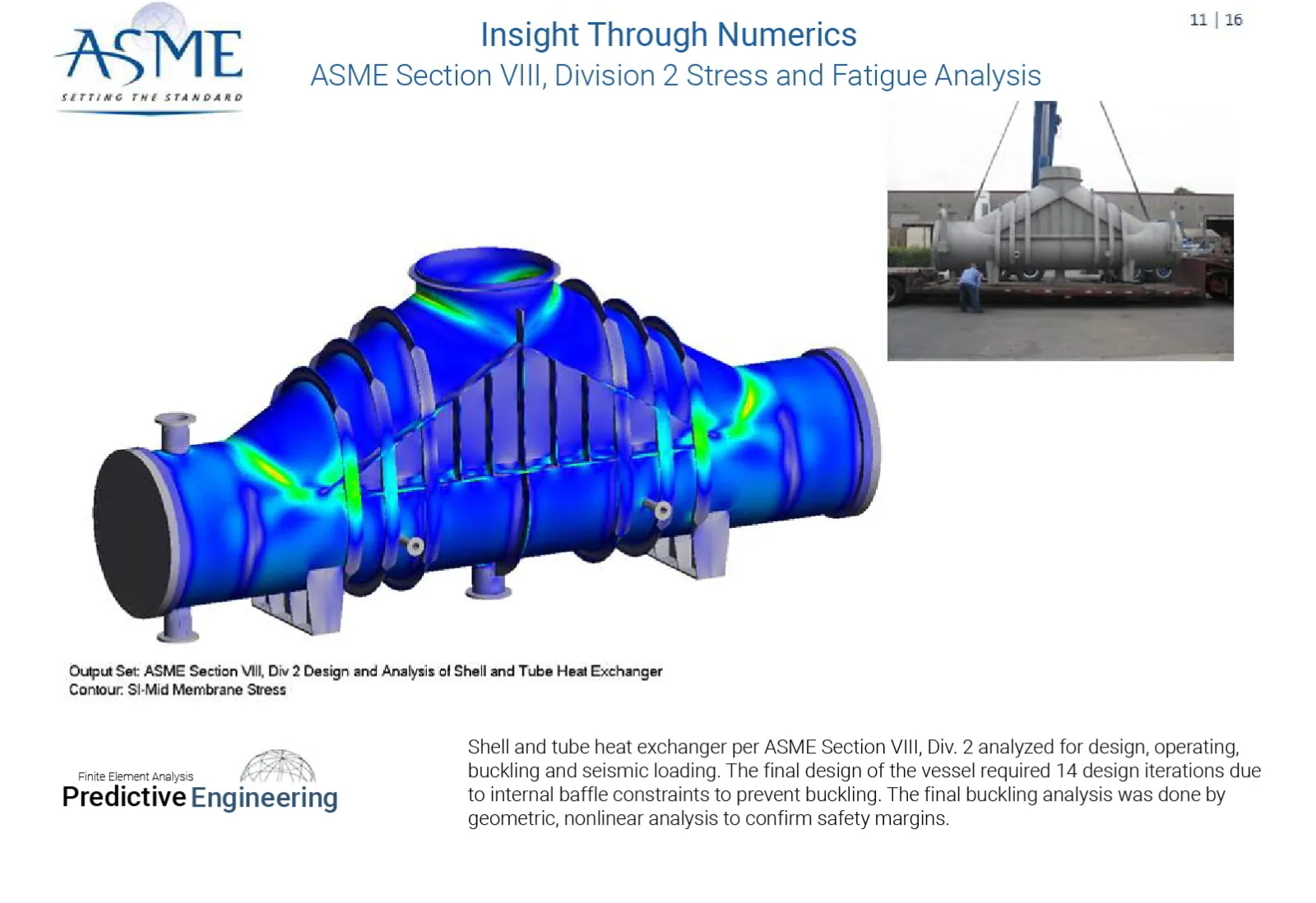
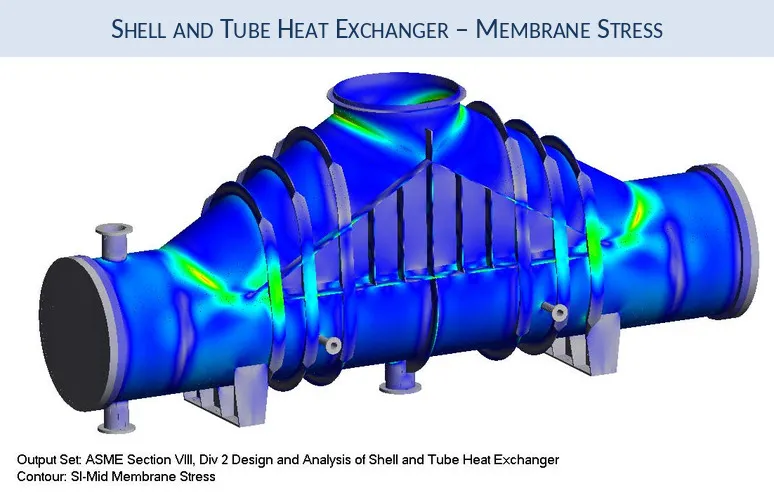
Shell and tube heat exchanger per ASME Section VIII, Div. 2 analyzed for design, operating, buckling and seismic loading. The final design of the vessel required 14 design iterations due to internal baffle constraints to prevent buckling. The final buckling analysis was done by geometric, nonlinear analysis to confirm safety margins.
Dual-Material Tube-Sheet Thermal Stress
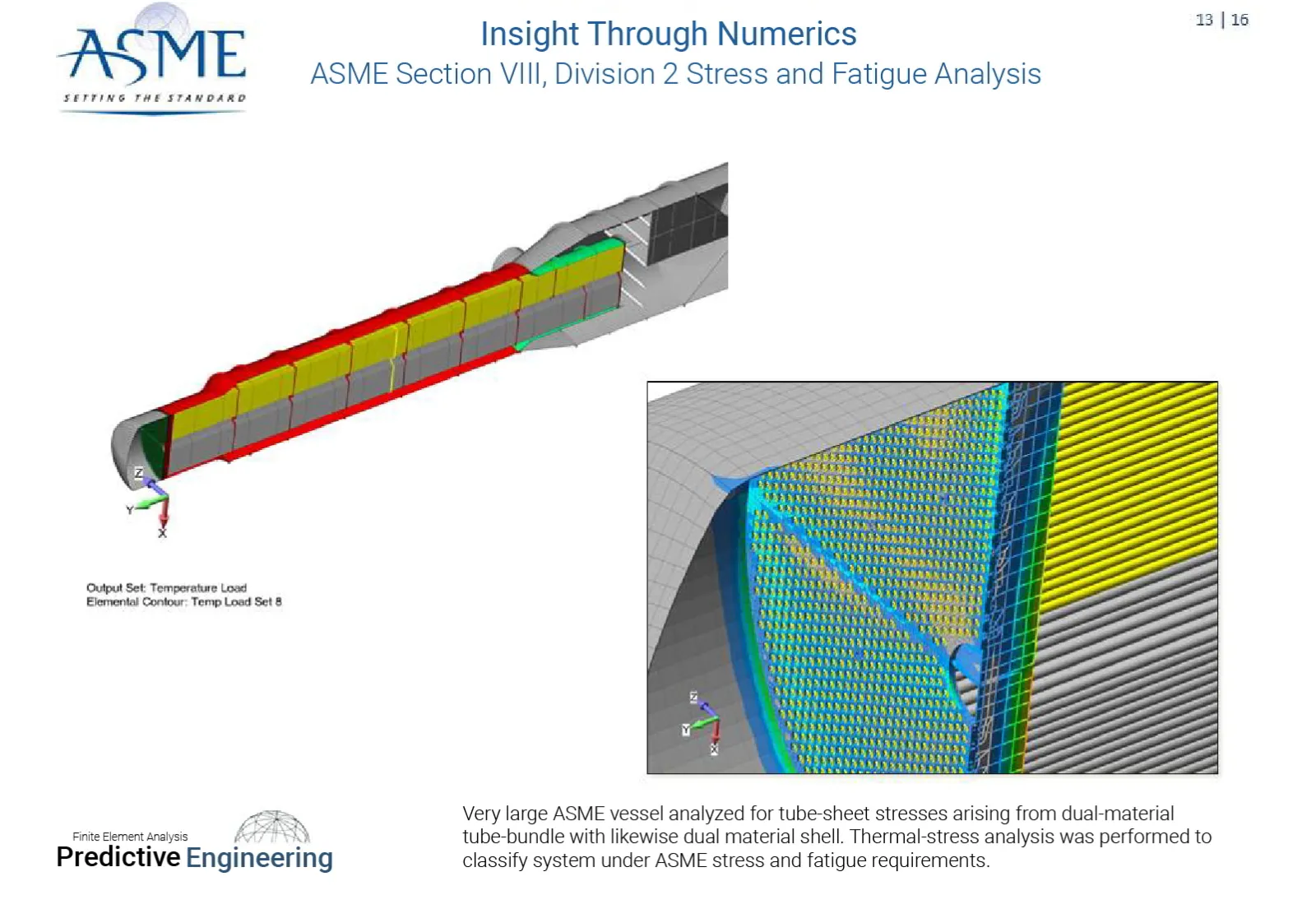
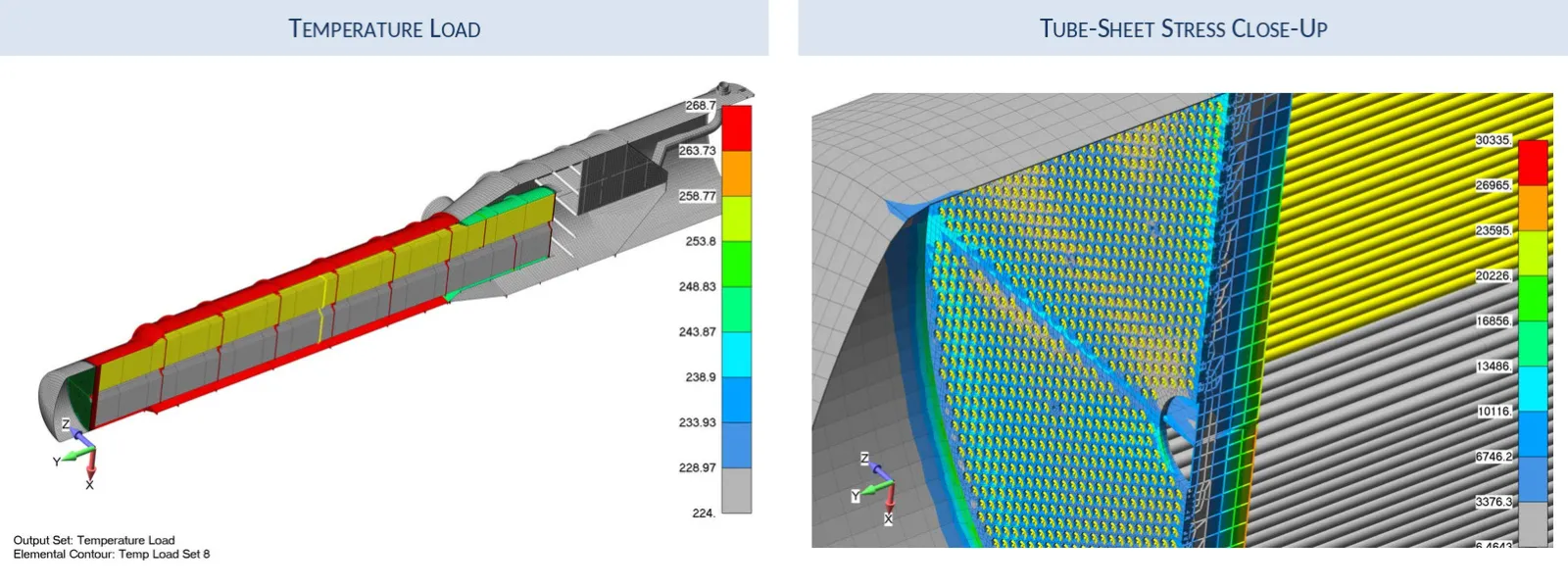
Very large ASME vessel analyzed for tube-sheet stresses arising from dual-material tube-bundle with likewise dual material shell. Thermal-stress analysis was performed to classify system under ASME stress and fatigue requirements.
Lifting Analysis of a Built Vessel System
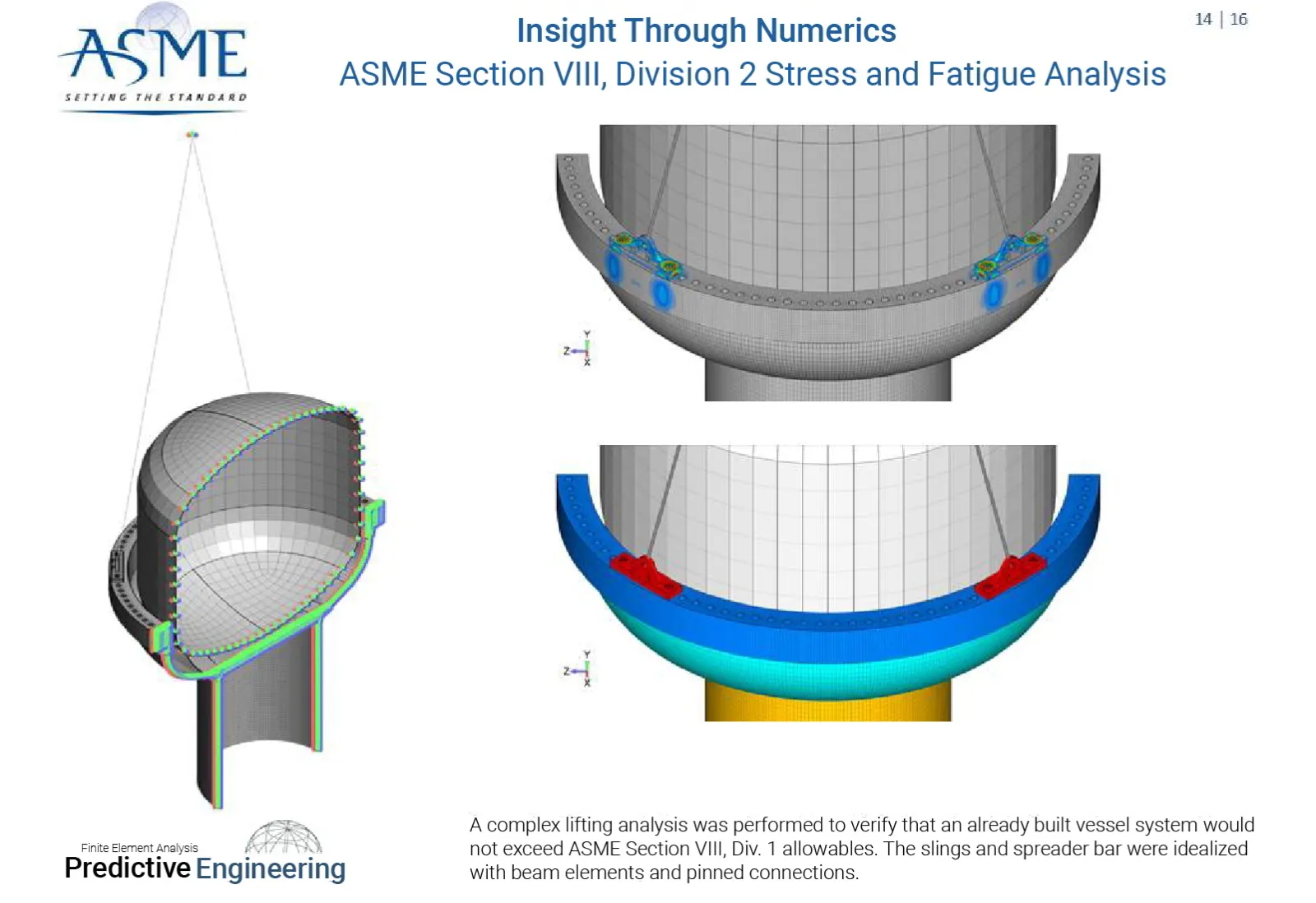
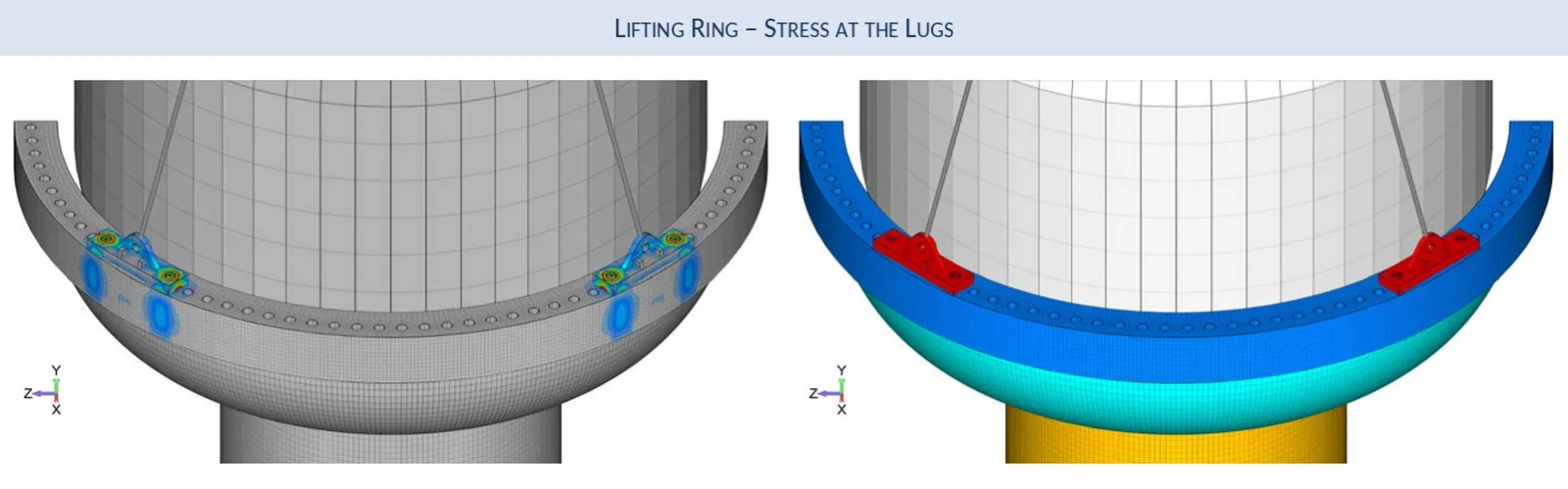
A complex lifting analysis was performed to verify that an already built vessel system would not exceed ASME Section VIII, Div. 1 allowables. The slings and spreader bar were idealized with beam elements and pinned connections.
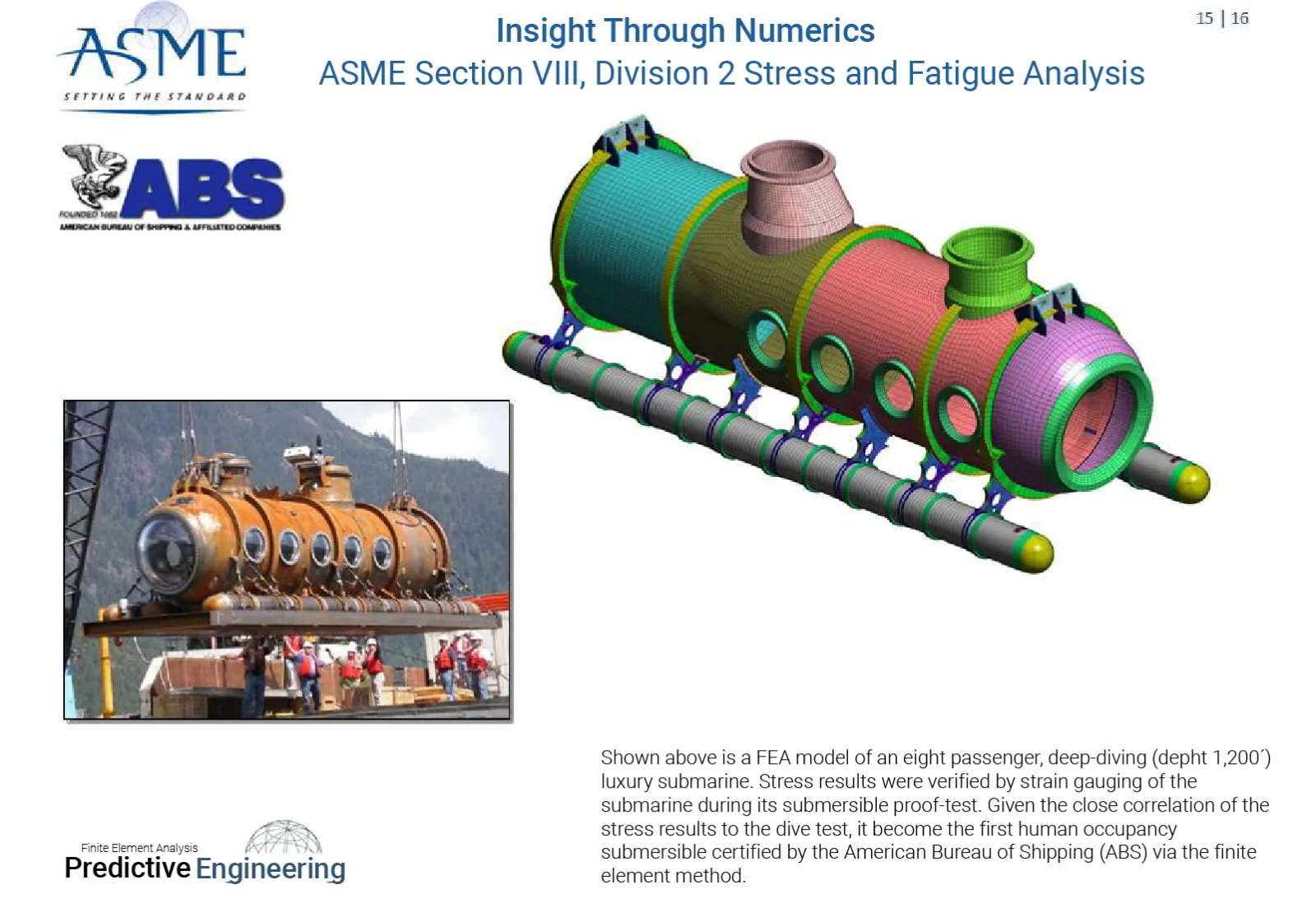
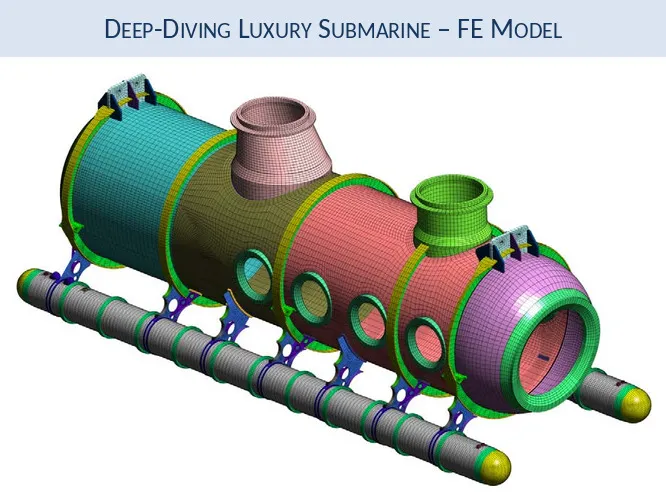
Deep-Diving Luxury Submarine
Shown above is a FEA model of an eight passenger, deep-diving (depth 1,200’) luxury submarine. Stress results were verified by strain gauging of the submarine during its submersible proof-test. Given the close correlation of the stress results to the dive test, it become the first human occupancy submersible certified by the American Bureau of Shipping (ABS) via the finite element method.
Predictive Engineering – The Advantage of Getting it Right the First Time